Let’s talk numbers!

Justin Kauffman • October 3, 2022
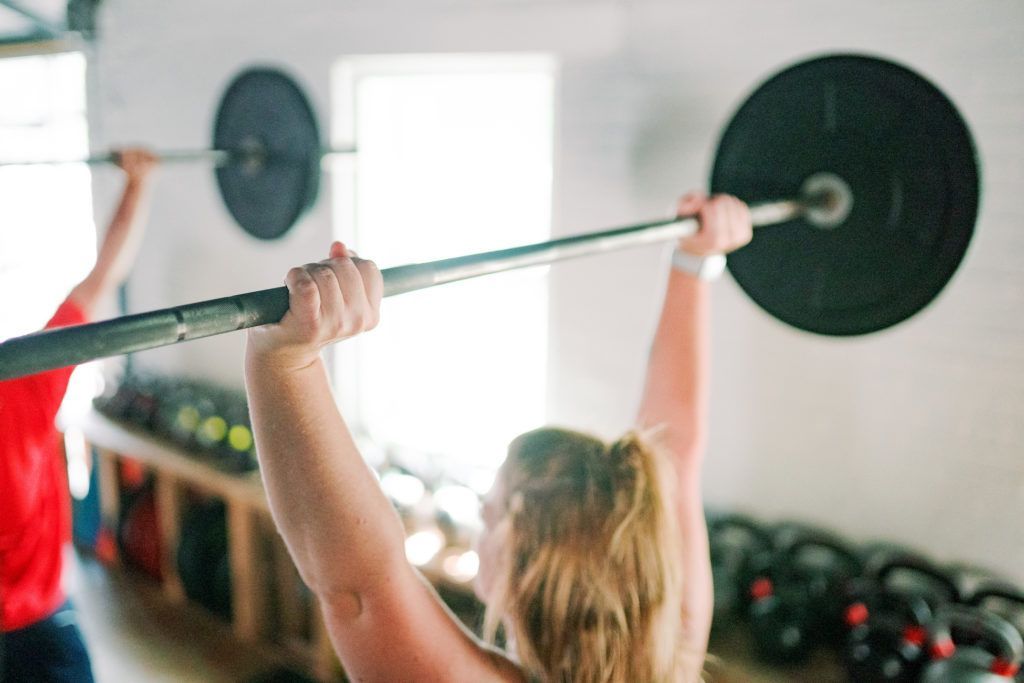
A woman is lifting a barbell over her head in a gym.

Whether you love them or loathe them, you can’t avoid numbers in life.

Think about all the places they come up: speed limits, prices, phone numbers, bank accounts, appointment times and so on. (We won’t even talk about doing taxes!)

Numbers are also a big deal to us. Here’s why: Numbers help us track your progress. Without this info, it’s harder to create milestones and then celebrate as you pass them. 

I’m not saying you have to become obsessed and log every number from every workout. That works for some people, but others prefer less drag. Instead of documenting everything, they focus only on benchmarks and numbers that relate to specific goals. These are the “Big Deal” numbers. 

For some, it’s less about logging workout numbers and more about tracking habits: e.g., “I made it to the gym four times a week for 10 weeks in a row” or “I had veggies at every dinner this week.”

Whatever works for you, I want to remind you to track your progress in some way. We’re going to review your progress together at regular intervals, but in between those check-ins, I want to make sure you feel the momentum and stay energized as milestones pass. Give yourself something to work toward and celebrate!

What’s the best way to track? 

It comes down to personal preference. Some people have physical log books complete with sweat stains and a dusting of protein powder. Some use simple spreadsheets. And others use one of the many cool workout- or goal-tracking apps out there. 

The best system is the one you enjoy using—but pick one and enter those digits! Doing so accomplishes two things: It will keep you focused on a goal, and it will provide motivation as you see how far you’ve come. 

“Even though I had a tough workday, I’m heading to the gym because I’m getting closer to X every day!” Or: “Wow! I could only lift X last year at this time. I’m twice as strong now!”

Because we’re talking numbers today, I want to ask two questions: Are any numbers making you smile right now? And are any of them not changing fast enough? 

MORE RECENT POSTS

By Frank Hurtado September 23, 2025
CrossFit is built on three core modalities: gymnastics, monostructural movements, and weightlifting . Each plays a unique role in developing well-rounded fitness: Gymnastics: bodyweight control and coordination (pull-ups, double unders, handstand push-ups). Monostructural: cardio and endurance (running, rowing, biking). Weightlifting: raw strength and power (snatches, squats, cleans, deadlifts). At RegenX Fitness, we structure our programming in 4-week cycles. During each cycle, we emphasize specific movements within every modality. For example, one cycle may focus heavily on snatches, back squats, or strict handstand push-ups while weaving in cardio pieces to build conditioning. We also program with different workout formats to create varied stimuli: AMRAPs (As Many Rounds/Reps As Possible) : Build endurance and mental toughness while encouraging athletes to pace themselves. EMOMs (Every Minute On the Minute) : Excellent for skill building, reinforcing technique under fatigue, and maintaining consistency. For Time Workouts: Develop speed and intensity, pushing athletes to complete a task as efficiently as possible. Within each of these formats, we vary time domains, each of which taps into a different energy pathway in the body: Short (0–2 minutes): Targets the ATP-PC system — raw power, explosive strength, sprint capacity. Moderate (2–10 minutes) : Engages the glycolytic system — high-intensity efforts that build stamina and grit. Long (10+ minutes): Relies on the oxidative system — endurance, pacing, and aerobic efficiency. By training across all these pathways, our athletes build the ability to perform at high levels whether it’s a short burst, a mid-range grind, or a long test of endurance. Another key feature of our programming is how we pair strength days (bench press, deadlifts, squats) with accessory work. While the big lifts train major muscle groups, the accessory movements target stabilizers and smaller muscles. This balance builds stronger joints, prevents imbalances, and enhances overall performance. This isn’t just random mixing—it’s a strategic, progressive approach designed to help members get stronger, faster, and more resilient over time. -Frank Hurtado
By Justin Kauffman January 10, 2025
The body content of your post goes here. To edit this text, click on it and delete this default text and start typing your own or paste your own from a different source.
A stack of gingerbread cookies with a red ribbon on a table with christmas decorations.
By Justin Kauffman December 11, 2022
Here’s the scenario: You get busy during the holidays. Really busy. You’re running around everywhere, you’re hosting relatives and friends, you’ve got all sorts of social commitments, and the kids’ schedules are packed with recitals and games. So you skip a workout. Then another. All of a sudden, it’s been a week since you hit […] The post Remember that something is always better than nothing. appeared first on Regenx Fitness and Nutrition.
More Posts